Faith-based organizers across the U.S. are mobilizing with increasing fervor to protect the integrity of the 2026 midterm elections.
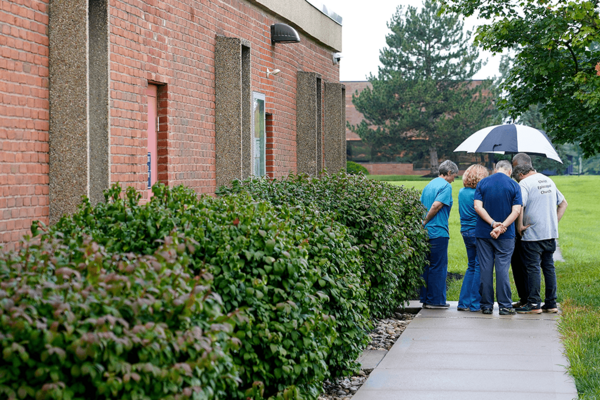
At the national and local level, nonprofits are spending their efforts on a variety of tactics to help people vote and ensure every vote is counted. Groups that traditionally held get-out-the-vote campaigns or hosted polling sites in their buildings are now also recruiting poll chaplains and training them in de-escalation. Faith leaders are meeting with county auditors, helping their neighbors volunteer as poll workers, and hosting “Know Your Rights” seminars centered on ensuring people feel confident in their right to vote. It’s all part of an expansive network, with muscles strengthened by the last decade’s growing concern for election security.
Connie Ryan has served as executive director of Interfaith Alliance of Iowa for 24 years. Up until recently, the majority of IAI’s election work was encouraging people to vote and occasionally soliciting answers from school board candidates. In 2020, they joined a local coalition in the lead-up to the general election.
“But this year we just felt like with all the rhetoric coming from Washington, D.C., and from some of our own elected officials in the state, we had to be clearly more involved and more direct about the work,” Ryan said.
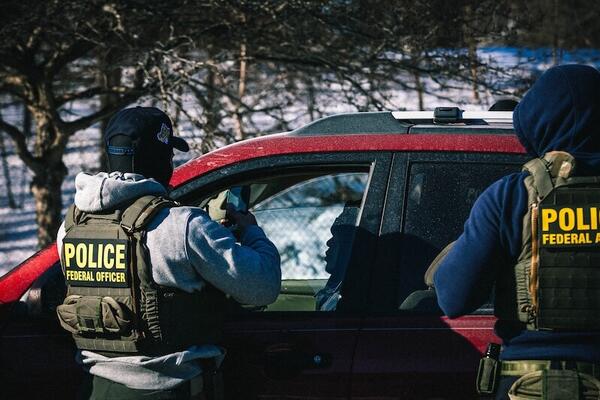
Federal seizures of ballots, an aggressive push to build a national voter-citizenship database, and attempted executive orders on mail voting are some of the efforts that have concerned these groups ahead of the November midterms. Concerns have also been raised about President Donald Trump’s refusal to rule out emergency powers over the election, and allegations of armed federal agents appearing at and around polling places.
In Iowa, there’s a need to recruit poll workers and poll watchers. Poll workers are the people who check voters in at the polling site, confirming their information and eligibility to vote. Poll watchers are given official permission to observe a polling site or absentee ballot-counting site, and they are often appointed by political parties, though sometimes by non-party political organizations or by petition. IAI is working with local clergy to promote both roles, telling congregations that “it takes all of us to make sure that we have free and fair elections.” IAI sends information on poll workers/watcher to more than 300 clergy through their email list.
IAI, through coalition partners, also participates in the Election Safeguards Response Network, a non-partisan coalition of national, state, and local organizers. ESRN is coordinating meetings with election officials, such as the county auditors who run elections at the county level in Iowa. When ESRN meets with a county auditor, IAI helps connect with local clergy who are willing to take part in conversations.
The bulk of Ryan and IAI’s work, however, has been their clergy rapid response network and trainings. IAI is coordinating with active and retired clergy to prepare for responding to threats between now and ballots being counted.
In September, IAI hosted three in-person and one virtual training with more than 40 clergy. The trainings cover election law, responding to a crisis, and security planning for clergy or congregations planning to be more engaged.
“You go into something like this, and you’re not sure exactly what’s going to happen, so there was a little bit of hesitancy of, ‘What have I gotten myself into?’” Ryan said. But by the end, the majority of clergy seemed prepared and motivated. One man even said he was willing to get arrested if necessary to protect the right to vote. “We weren’t promoting that by any means, but they understood the importance of the conversation and the urgency of where we are in our country and the challenges to democracy that a lot of the rhetoric is creating.”
Tracking local and federal voting laws
In Arizona, the Arizona Faith Network—an interfaith group that grew out of the Arizona Council of Churches—has operated its “Faithful Arizona Voter” program for about six years. Rev. Katie Sexton, an ordained pastor in the Christian Church/Disciples of Christ tradition, is the executive director of AFN, and said the work is “rooted in the understanding that our vote is our voice, and our voice is sacred because of the imago Dei that cuts across our traditions.”
Sexton said AFN was pulled further into election work through their partnership with the African American Christian Clergy Coalition and has leaned into partnerships with Faiths United to Save Democracy. Sojourners is a co-convener of FUSD, alongside the Skinner Leadership Institute and Georgetown University’s Center on Faith & Justice.
[Editor’s note: Under Sojourners’ protocol for reporting on itself, no Sojourners staff outside of the editorial teams reviewed this story before it was published. Read more about our editorial independence policies.]
This year, AFN’s main areas of focus within democracy work are tracking state and federal legislation on voting laws and recruiting and training poll chaplains and peacekeepers.
During the primary season, when Phoenix and Tucson, Ariz., temperatures are regularly above triple digits, AFN organized around 40 people to commit to peacekeeping at poll sites. They circulated frozen water bottles, shade canopies, sunscreen, and misting fans to protect folks from heat stroke. The commitment comes in part over the fear that federal immigration enforcement will intimidate citizens who fear being swept up in the reckless, wanton enforcement seen throughout the second Trump presidency.
“We did see some [Immigration and Customs Enforcement] staging going on in one of our historic Latinx neighborhoods in Arizona. They were not at the polling locations, but they were nearby kind of preparing for a raid,” Sexton said. “I feel like that was intentional, a fear tactic, testing the waters to see what it would be like come this fall with ICE and polling locations here.”
In response to that fear, AFN is encouraging as much early voting as possible, organizing “party at the polls” events. For voters afraid of going to the polls alone, AFN is organizing shuttles of groups to vote together.
Educating voters on ballot initiatives, Sexton said, has become extra important with Proposition 144 on ballots. The proposition would amend the Arizona Constitution to require government-issued identification to cast a ballot, including for mail-in voters, in a state where 70% of voters vote by mail. The Republican-backed proposition is unclear on how mail-in voters would present their ID, according to Arizona Mirror reporting.
READ MORE: The Pro-Labor Gospel Is Back on the Ballot
AFN also partners with Election Protection Arizona, a nonpartisan coalition focused on protecting the right to vote. One Arizona, a civic engagement nonprofit, helps organize the coalition, coordinating hundreds of volunteers across the state. Program manager Daisy Barba said she considers AFN one of their “star volunteer organizations.”
“It’s always so moving to have faith groups in the room,” Barba said. “I was inspired by the care and passion that they bring to the work.”
Faith groups, she said, embody the best of grassroots organizing, since they are rooted in actual, local communities and because their work is founded on relationships.
“Even though they might not have a large presence on social media or on the news, they’re doing the groundwork in person, and you see the impact when they show up,” Barba said.
Fighting misinformation and fear
In Wisconsin, Matthew Kendziera leads the interfaith nonprofit WI Faith Voices. He took the job in July of 2024; six months later, after Trump’s second inauguration, he said the whole job changed. For multiple election cycles now, WIFV has had a poll chaplain program and get-out-the-vote efforts. Now, the fight for democracy has been tantamount in all arenas of their work.
Starting in 2025, with ramped-up federal immigration enforcement, Kendziera said the needs of the immigrant community in Wisconsin skyrocketed.
“We have a volunteer driver network where we take immigrants to court-ordered appointments and biometric appointments in Milwaukee and Chicago. The need for those appointments has increased between 30% and 40% since 2024,” he said. “One of the things that we’ve had to do is just enlist a lot more volunteer drivers.”
Now, headed into elections, there’s a lot of misinformation and fear within those communities. Helping faith leaders communicate accurately about voting rights, and getting clergy to prepare for deesclatory measures if ICE does show up near polling sites, have been major efforts. WIFV recruited around 70 chaplains in 2024 to serve as poll chaplains; this year, they’re expanding the effort and recruiting non-clergy to serve as “peacekeepers” alongside clergy. They anticipate recruiting between 150-200 volunteers, and Kendziera said they’ve had a lot of early success, recruiting 50 people in the first couple of weeks.
Democracy work has also been a key lens for their community building efforts. WIFV has been celebrating the country’s 250th anniversary with a program that pairs discussion on the nation’s founding with the principles of democracy.
“Democracy should be cooperative, and democracy should be something that we do together,” he said.
Collaborating with wider coalitions
A consistent theme when speaking to faith organizers is that they are partnering with larger coalitions in their states. WIFV works alongside the Wisconsin Civic Power Table. They’re specifically looking to educate voters on Wisconsin’s constitutional amendments and, as an interfaith group, explain why they oppose amending the state constitution to prevent closing houses of worship during state emergencies.
Beyond local collaboration, faith organizers are connected through national nonprofits and coalitions. Arizona Faith Network, WI Faith Voices, and Interfaith Alliance of Iowa are all affiliates of the national nonprofit Interfaith Alliance. The national group gathered several of its affiliate leaders, alongside national faith leaders, for a crisis scenario training in July. Those trainings were what spurred the Iowa group to run their training for local clergy.
Guthrie Graves-Fitzsimmons, vice president of programs and strategy for Interfaith Alliance, said those trainings cover election threats from voter disenfranchisement, politicized investigations of election officials, or intimidation from independent individuals on election day. Attendees were also trained on how to handle situations like federal ballot seizures, a refusal to certify an election, manipulation of election results, and threats to members of Congress.
Much of that preparation comes out of real efforts seen in 2020 and the aftermath of Trump’s false claims that the election was stolen. In Maricopa County, Ariz., for example, election officials faced death threats and baseless audits that promoted the claim of a stolen election.
Already this year, Department of Homeland Security officials claimed voter rolls in Nevada included 16,000 noncitizens, then claimed that 185 noncitizens were improperly allowed to register to vote. The state’s deputy attorney general has refuted those claims, and DHS officials have not offered any further verification to the state.
“Across all of those threats, we’re trying to prepare faith leaders for the role they can play in sharing trusted information, in mobilizing if there’s certain moments where we need mass mobilization to happen,” Graves-Fitzsimmons said.
Interfaith Alliance, Graves-Fitzsimmons said, has worked closely with Protect Democracy, a nonprofit dedicated to defeating authoritarianism and strengthening democratic institutions. Graves-Fitzsimmons highlighted the 2023 “Faith in Elections Playbook,” created by Interfaith America and Protect Democracy to help religious communities navigate the election.
Interfaith Alliance is also launching a bus tour, traveling a path that follows the Voting Rights Lab Election Risk Heat Map. The map identifies counties where “close contests, bad actors, and systemic weaknesses collide to increase risk” of an election crisis.
Amid all the preparation, organizers stress that their preparation for crisis shouldn’t be taken as a statement on the security of elections.
“We don’t want to unnecessarily alarm people,” Graves-Fitzsimmons said. “We need to understand all of the threats and not over-communicate what’s possible but be clear-eyed about actions as they happen and mobilizing people in key areas.”
In Iowa, Ryan with Interfaith Alliance of Iowa said the same about their trainings for clergy across the state: “We’d rather be prepared and have nothing happen than to have something happen and not be prepared.”
“It’s always so moving to have faith groups in the room. I was inspired by the care and passion that they bring to the work.” — Daisy Barba, Program Manager for one arizona

Did this article have an impact on you? Tell us how! Whether you’re moved to take action, have a question, or want to share a comment (good or bad), we value your feedback!