The Emperor Constantine, who in the fourth century made Christianity an instrument of Roman imperial cohesion, valued Christianity for its capacity to unite an empire under his authority. For many oppressed Christians, this use of Christianity to build empires still exists today, yet in a different form. Today, empire-building is deployed through the language of protecting what many call “Western civilization.” And it is an empire-building strategy that has brought many Christians together across the religious lines that once divided them—Roman Catholic, Protestant, and even “cultural Christians”—as a new ecumenical movement.
Scholars like Leonard A. Schuette call this political ideology “Western Civilizationism.” In this ideology, the primary unit of belonging is not the nation, the state, or the country, but a broader Western civilization: “the West is defined by a specific geographic territory, a shared ancestry, and Christianity.” For adherents of Western Civilizationism, Christianity is a crucial component for organizing a civilization’s culture and values. Any threat to their version of Christianity must be considered a threat to the West itself.
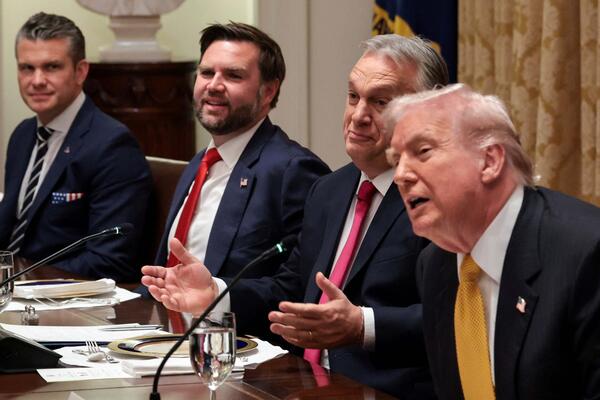
A self-identified Reformed Calvinist, former Hungarian Prime Minister Viktor Orbán declared in a 2018 address that “Christianity is Europe’s last hope,” blaming pro-migration politicians in Brussels, Berlin, and Paris for the decline of Christian culture and the advance of Islam. Adherents of Western Civilizationism frame Islam as a separate civilization that is opposed to the West. Seeking Orbán’s reelection in 2026, U.S. Vice President JD Vance (a Roman Catholic) remarked that both Hungary and the U.S. share a “moral cooperation” to defend the idea that “we are founded on a certain Christian civilization and Christian values[.]”
The goal of preserving a Western (“Christian”) civilization across the U.S. and Europe lends credence to fears about the growth of Islam. In July 2024, Vance said that the United Kingdom under the Labour Party might be the first “truly Islamist” country to have access to nuclear weapons. In a March 2025 interview, Vance argued that Europe was at risk of “civilizational suicide.”
Beyond political figures, local Christian leaders are also worried about the encroachment of Islam’s culture and values on the U.S. specifically, and the West generally. Conservative Catholic podcaster Taylor Marshall said that Islam is incompatible with Western civilization; evangelical pastor Lorenzo Sewell announced a “Christian Crusader March” in Detroit with the slogan, “Stop Islamification of America.”
While many may be familiar with “Christian nationalism,” Yale sociologist Philip S. Gorski argues that the problem has evolved into a project focused on establishing Western Civilizationism to build a new “global Christendom” with the U.S. at the center. Why are Christians from across various geographies and traditions banding together, in a distinctly ecumenical fashion, to defend the idea of a Christian West? What does the language of “the West” reveal about their political aims?
For Ghanaian philosopher Kwame Anthony Appiah, the idea of the “West” has always been just an idea, a human invention. “There is no such thing as western civilisation,” Appiah argues. The “West” is only a story many have told themselves—a myth of historic greatness to legitimate fictitious claims to dominance by a people who deem themselves supreme over all. Even for historians like Naoíse Mac Sweeney, the “West” is not only a human invention, but it reinforces a false history about a distinctly Western civilization that is hegemonically Christian. There have never been separate civilizations. All peoples and communities have existed in constant exchange with one another—sometimes through violent means or for imperialist ends.
READ MORE: How to Write an Opinion Piece for Sojourners
The same year Orbán declared that Christianity was Europe’s last hope, he also led Hungary to join the Organization of Turkic States, an entity in which every participating Turkic state was governed by authoritarians. While Vance can correctly be called Islamophobic, he met Saudi Defense Minister Prince Khalid bin Salman at the White House hours after joint U.S.-Saudi strikes in Iraq. Both Orbán and Vance’s Western Civilizationism turn out to be perfectly compatible with Muslim autocracy abroad as long as it aligns with their military and economic goals. Further, both Orbán and Vance have declared their support for Israel, which functions as a Jewish, ethno-nationalist state. When speaking in December 2023 about Israel’s onslaught against Gaza, Israel’s president Isaac Herzog described Israel’s genocidal campaign “as a war that is intended, really, truly to save Western civilization[.]”
The Western tradition of empire-building is built on blood and bones.
The Western tradition of empire-building is built on blood and bones.
Indonesian theologian Perdian Tumanan is cognizant of such empire-building in our world today. He urges other Catholics and Protestants to build a different kind of ecumenism that is not built on the accumulation of power but on the creation of just societies. Especially since the Second Vatican Council, Catholics have begun to engage theologically and ecclesially with Jews, Muslims, Orthodox Christians, Protestants, and vice versa. But Tumanan remarks that, in a time of global empire, it is time for these ecumenical dialogues to expand their focus from doctrinal concerns to political solidarity: “In such a setting, ecumenism cannot remain confined to doctrinal comparison. It must also become an ethical task,” he said.
Today, Palestinian Christians’ model of building solidarity across a diversity of religious traditions (Christian or not) is a strong model for resisting Western Civilizationism. In Palestine, Palestinian Christians from a variety of traditions are joining in solidarity with Jews and Muslims, working toward a vision of the future that is not built on genocide and authoritarianism. The 2009 Kairos Palestine document, “A Moment of Truth,” was drafted in Bethlehem by an ecumenical group, and it names interreligious dialogue among Christians, Muslims, and Jews as a sign of hope precisely because all of them “undergo the same sufferings and have the same expectations.” When Israeli airstrikes struck the 12th-century Greek Orthodox Church of St. Porphyrius in Gaza City on Oct. 19, 2023, the more than 400 people sheltering inside were both Christians and Muslims; at least 18 were killed. Weeks later, Holy Family Catholic Church was sheltering some 500 Palestinians—again both Christians and Muslims—when snipers killed a mother and daughter on the compound.
Such violence against Palestinians has consistently been described as an attempt to protect “Western civilization,” as Hamid Dabashi documented in his new book After Savagery: Gaza, Genocide, and the Illusion of Western Civilization. Yair Dvir, a Jewish spokesperson for Israeli human rights organization B’Tselem (a name taken from Genesis 1:27’s “the image of God”), shared that religion in the region has become “a political instrument of violence and control,” and yet there are many “Muslims, Christians, or Jews who are working together with Palestinians for justice.” This offers us an example of an ecumenical, multifaith coalition working against the exclusionary, authoritarian Christianity of Western Civilizationism.
For these Muslims, Christians, and Jews, the task is not to establish a dominant civilization that bombs the weak, espouses prejudice, or marginalizes the poor. Rather, it is the conviction that all creatures deserve true dignity and liberty. It is the deconstruction of the myth of Western civilization itself, one where faith and religion will no longer sanctify empire. If there is to be any ecumenism, it is not the endless accumulation of power built on Western civilization. Rather, true ecumenism is that which follows a God whose purpose for all creation is to see its ultimate flourishing and peace.

Emma Cieslik (she/her) is a queer, disabled religious scholar and museum worker based in Washington, D.C.

Yanan (he/him) is a writer from the Philippines who serves as editorial director at the Center for Barth Studies, where he guides initiatives that examine Christian faith and practice through the lens of progressive politics.
Did this article have an impact on you? Tell us how! Whether you’re moved to take action, have a question, or want to share a comment (good or bad), we value your feedback!