
Yanan (or Abdul) is a writer from the Philippines who serves as editorial director at the Center for Barth Studies, where he guides initiatives that examine Christian faith and practice through the lens of progressive politics. He holds a master of divinity from Princeton Theological Seminary and produces house music in his spare time. His writing has appeared in BitterSweet Monthly, Interfaith America, the Institute for Christian Socialism, and other outlets. Find him on Instagram: @yananrahim.
Posts By This Author
‘Western Civilization’ Has Always Been a Harmful Christian Lie

The Emperor Constantine, who in the fourth century made Christianity an instrument of Roman imperial cohesion, valued Christianity for its capacity to unite an empire under his authority. For many oppressed Christians, this use of Christianity to build empires still exists today, yet in a different form. Today, empire-building is deployed through the language of protecting what many call “Western civilization.” And it is an empire-building strategy that has brought many Christians together across the religious lines that once divided them—Roman Catholic, Protestant, and even “cultural Christians”—as a new ecumenical movement.
Scholars like Leonard A. Schuette call this political ideology “Western Civilizationism.” In this ideology, the primary unit of belonging is not the nation, the state, or the country, but a broader Western civilization: “the West is defined by a specific geographic territory, a shared ancestry, and Christianity.” For adherents of Western Civilizationism, Christianity is a crucial component for organizing a civilization’s culture and values. Any threat to their version of Christianity must be considered a threat to the West itself.
Empire Is More Than a Political System. It’s a Spiritual Reality

I remember the first time I heard the term “empire.” It was when I read anti-imperial literature written by revolutionaries who defended my home, the Philippines, from Western domination. I learned from their witness that empire is a structure of sin. I also learned from fellow Filipino Christians that if one calls themselves a “disciple of Jesus,” imperial power must be concretely challenged and resisted, as it does not cohere with the way of Jesus.
A shorthand for “imperial power” among social justice Christians is the term “empire.” When Christians use this term, we are not just describing a historical structure of domination, but we are comparing and contrasting the politics of empire with the kingdom of God (Matthew 5:3-12; 20:25-26).
Why Are So Many Drawn to Authoritarianism?
Ibram X. Kendi’s Chain of Ideas explores the collapse of American democracy
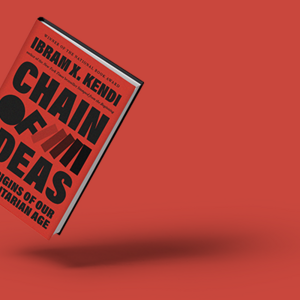
THE QUESTION IS no longer whether we live in a time of democracy’s collapse in the U.S. The question is how we got here. Historian Ibram X. Kendi might have uncovered that history.
Decolonizing Faith From Palestine to the Philippines
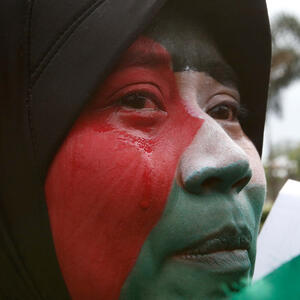
On April 19, the Armed Forces of the Philippines killed 19 individuals and forcibly displaced more than 653 residents in Negros Occidental, an island in the southern Philippines. The AFP defended their operation as necessary “to confront armed groups that threaten local communities,” while activist group Bagong Alyansang Makabayan (New Patriotic Alliance) contends that the attack constituted “indiscriminate firing and strafing.” For Bagong Alyansang Makabayan, it is another example of the Manila government’s fascist violence against the poor and unarmed civilians.
On April 20, a day later, the Israel Defense Forces launched airstrikes, killing five Palestinians in Gaza and leaving many others wounded. The Peace Research Institute Oslo reports that at least 75,200 people have been murdered by Israeli forces since October 2023. Indeed, while separated by thousands of miles, there is an intimacy that binds Palestine and the southern Philippines together—an intimacy forged through the destructive imperialism of the United States.
‘The Peace President’ Threatens to Annihilate an Entire Civilization
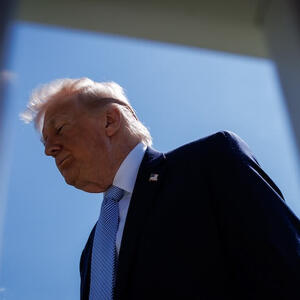
At the beginning of 2026, President Donald Trump said that his New Year’s resolution was to accomplish “peace on earth.” As he asserted last year with his aggressive campaigning for the Nobel Peace Prize, and the White House dubbing him “THE PEACE PRESIDENT” on X, Trump was convinced that he would be the one to fulfill it with “no new wars.” But just two days after issuing this resolution, Trump had Venezuelan President Nicolás Maduro kidnapped.
It is a pattern that has continued deep into 2026—promises of “peace” followed by bloodshed and violence. In January, Trump announced the Board of Peace, an international effort to “stop generations of hatred and bloodshed.” A month later, a joint U.S.-Israeli airstrike hit an Iranian all-girls elementary school as a result of outdated intel, killing at least 168 people, most of whom were children.
On April 7, Trump threatened the people of Iran if the government refused to reopen the contested Strait of Hormuz, a trade route through which about 20% of the world’s oil passes. “A whole civilization will die tonight, never to be brought back again,” Trump threatened on his social media platform.
Why I'm Mad About Trump's Defense of Religious Freedom
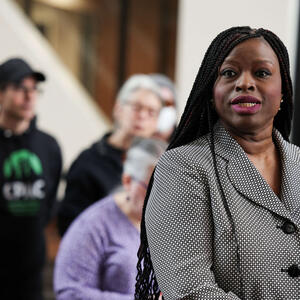
On Jan. 22, federal authorities arrested at least two organizers linked to a nonviolent protest inside Cities Church in St. Paul, Minn., that interrupted services at a congregation where one of the pastors doubles as the acting director of the Immigration and Customs Enforcement St. Paul field office.
Celebrating the arrests, Attorney General Pam Bondi vowed through a post on X: “WE WILL PROTECT OUR HOUSES OF WORSHIP 🙏🏻”.
Rev. Nekima Levy Armstrong, a Minneapolis activist and ordained minister, was one of the organizers arrested. Referring to ICE, she told the Canadian Broadcasting Corporation on Feb. 4 that “They have been physically brutalizing people, dragging people from their homes, kicking down people’s doors, coming into people’s homes with big guns, arresting people unjustly, even U.S. citizens, and people who are here legally.” She added, “To have someone serving as a pastor who is also overseeing these agents is unconscionable, unacceptable, and antithetical to the Christian faith.”
Mary Casts Down Pete Hegseth’s False God
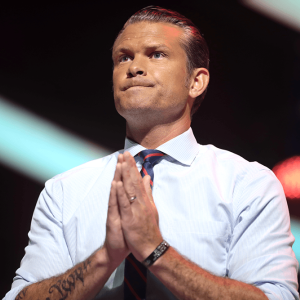
I remember the first time I asked Mary to pray for me. It was at the height of the George Floyd protests in June 2020.
I Came to the U.S. a Capitalist, Now I Support Mamdani
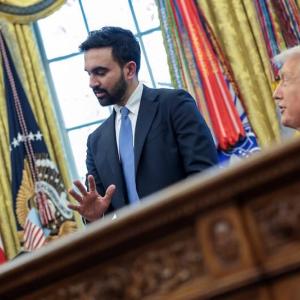
When President Donald Trump and New York Mayor-elect Zohran Mamdani first met back in November, I had to laugh. Partially because there is something deeply absurd about these two men—Mamdani, a self-proclaimed Democratic Socialist, and Trump, who once proclaimed he wished to be a dictator for “one day”—smiling and posing for photos in the Oval Office. But I mainly found myself laughing because, despite the drastic differences between these two politicians, both have been critical to my own faith and political journey.
What Jesus Teaches About Those Who Let Kids Go Hungry
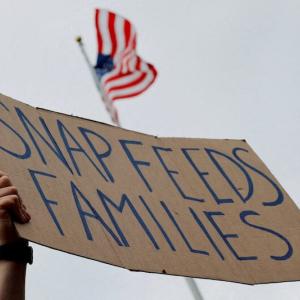
This past weekend, funds for the Supplemental Nutrition Assistance Program ran out due to the longest government shutdown in U.S. history. But after two federal judges ruled that the Trump administration could not legally prevent the nation’s largest anti-hunger program from receiving funds, the administration said it would designate $4.65 billion from an Agriculture Department contingency fund to offer partial relief to the 42 million people who rely on SNAP benefits.
The Christian Case for Open Borders
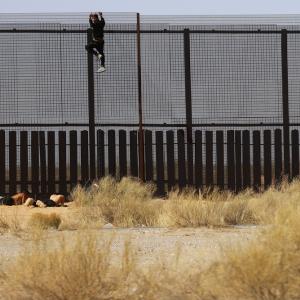
A federal judge has ordered the closure of the notorious immigration detention center known as “Alligator Alcatraz,” citing environmental violations and opposition from the Miccosukee Tribe. Progressives are celebrating this as a significant triumph for Florida’s Everglades, Indigenous communities, and the migrants who have endured the detention center’s conditions. But is this court ruling truly the sweeping victory that advocates claim?
Charlie Kirk Deserved the Life He Callously Denied Others
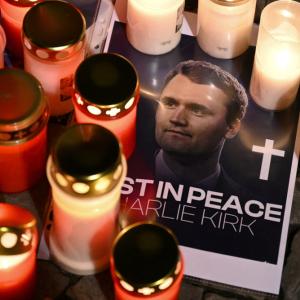
I read the news, stepped into my car, and let out a guttural scream.
Charlie Kirk, 31, had been shot and killed while speaking at Utah Valley University.
Can Global Evangelicalism Save American Evangelicals From MAGA?

In many headlines and on social media, the term “evangelical” is often conflated with “conservative,” “white,” “male,” and “American.” Many in the U.S. evangelical community are resisting that conflation, actively pushing for a new vision for evangelicalism that situates it within a global landscape. For these evangelicals, the future of evangelicalism is less James Dobson and more Botrus Mansour.
As such, Christianity Today often uplifts the multicultural face of global evangelicalism, suggesting that decentering the white American experience offers a new path forward for evangelicalism. Hence, the oft spoken refrain: The new face of Christianity is not a white man, but a woman in Africa.
5 Imperatives for Seminaries Under Authoritarianism
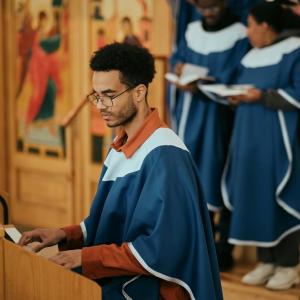
Immigrants are being disappeared. Journalists are being threatened. Protesters are being criminalized. The poor are abandoned. The sick are left behind. Wars still rage. Democracy is crumbling.
The world feels increasingly precarious, and various crises are compounding and multiplying. What moral responsibility do religious institutions—especially seminaries—have at this time?
Zohran Mamdani Is Busting a Myth Many Christians Still Believe

<p>
New York City mayoral candidate Zohran Mamdani looks on during an event to celebrate his endorsement from District Council 37, New York's City's largest labor union, in New York City, U.S., July 15, 2025. Credit: Reuters/Adam Gray.
</p>
When Democratic Socialist Zohran Mamdani defeated Andrew Cuomo in New York City’s mayoral primary, the political establishment didn’t quite know what to do.
Headlines described Mamdani’s win as “stunning,” “electrifying,” an “upset,” and even a “miracle.” Right-wing critics responded with predictable vitriol, labeling Mamdani a “communist,” “terrorist,” and a “little Muhammad.” These attacks were aimed both at his politics and his identity as an Indian American, a Muslim, and a socialist.
But what was most remarkable about Mamdani’s successful campaign wasn’t necessarily Mamdani himself. Rather, it was the working-class support behind his campaign that captured people’s attention.
Superman, the Immigrant, Has Always Reminded Me of Jesus

<p>
'Superman' / Warner Bros / Courtesy Everett Collection
</p>
Superman has always reminded me of Jesus.
In director James Gunn’s latest interpretation, Superman, Clark Kent is once again the heroic savior — thrust into battles against villainous forces and multi-dimensional threats. But this time, the stakes are political.
Can Kendrick Lamar Be a Prophet — and Be Rich?
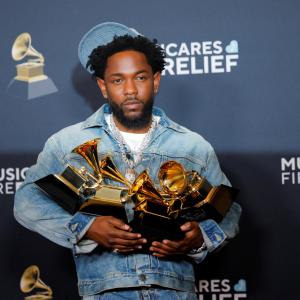
FILE PHOTO: Kendrick Lamar, winner of the Record Of The Year, Best Rap Performance, Best Rap Song, Best Music Video, and Song Of The Year awards, poses in the press room during the 67th Annual Grammy Awards in Los Angeles, California, U.S., February 2, 2025. REUTERS/Mike Blake/File Photo
Kendrick Lamar is a prophet — and a multimillionaire. Through his music, he tells the stories of the oppressed and marginalized, even as his own net worth surpasses $140 million. He calls for spiritual and political resistance to empire yet stood center stage at the Super Bowl halftime show — America’s most-watched spectacle of capitalist excess. At the end of it, he delivered a moment of rebellion, urging viewers to “turn the TV off,” subverting the very platform that elevated him. And yet, the performance also propelled his music sales and deepened his entrenchment within the industry’s elite. At a sold-out Pop Out show, he brought together feuding Bloods and Crips in a powerful gesture of peace and unity — sponsored, ironically, by Amazon, a corporation widely criticized for its union-busting, exploitative labor practices, and surveillance capitalism.
‘The N-Word of God’ Subverts Racist Iconography
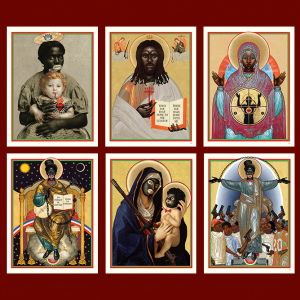
Images from Mark Doox's The N-Word of God. Graphic by Mitchell Atencio/Sojourners.
As racist ideas continue to plague U.S. politics, Mark Doox’s Afro-surrealist and satirical graphic novel, The N-Word of God, couldn’t have arrived at a better time.
The book is a visual novel told through depictions of anti-Black images — Black people eating watermelons, Jim Crow caricatures, mammies, and blackface — all stylized in the form of Eastern Christian iconography. This is a style that Doox has termed “Byzantine Dadaism.” Doox’s novel deconstructively takes these caricatures that have historically harmed Black people and reimagines them as symbols of Black resilience and healing, restoring the inherent dignity that belongs to every human being, especially those who have been racialized and subjugated by U.S. anti-Blackness.
Black Religion Thrives on Difference
J. Kameron Carter explores the disruptive, poetic practice of Black religion.
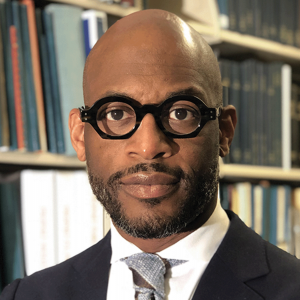
From Indiana University
ON APRIL 13, 2023, Ralph Yarl, a Black 16-year-old in Kansas City, Mo., went to pick up his younger siblings from a friend’s house. Mixing up the address, Yarl accidentally knocked on the door of an 84-year-old white man, Andrew D. Lester, who reacted by shooting Yarl in the head and then in the arm. Police took Lester into custody, only to release him without charges in less than two hours. As a result, protesters marched in Lester’s neighborhood, calling for his arrest. After days of protest, Lester was apprehended. In court, he pleaded not guilty, saying that he shot Yarl twice because he was “scared to death.” Yarl was in the hospital for three days before returning home to recover. In response to the shooting, Kansas City Mayor Quinton Lucas, who is Black, lamented, “You’ve heard about driving while Black ... Can you not knock on the door while Black? It’s almost like you can’t exist.”
In The Anarchy of Black Religion: A Mystic Song, J. Kameron Carter, a scholar of religion, English, gender, and African American studies, frames the current reality of modern Black suffering as “antiblackness,” or in his own words, “the settler colonial antiblackness of the religion of whiteness.” For Carter, antiblackness is the performance of a racial liturgy. This may sound strange to some readers — how can racism be religious, or liturgical? But what Carter is getting at is that there is a pattern — a ritual — to white violence against Black people. Lester’s shooting of Yarl was just one incident of this racial liturgy playing out. The murder of Jordan Neely by Daniel Penny in a New York subway car is another. They are all sacrifices on the altar of whiteness.
The Gospel Belongs to the ‘Heathen,’ Not White Saviors
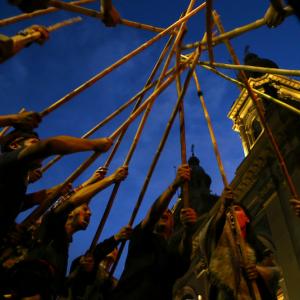
Mapuche Indian activists raise their sticks during a demonstration to demand justice for indigenous Mapuche inmates as well as for their indigenous rights and land for their communities, in Santiago, Chile, November 21, 2016. Image credit: Reuters/Ivan Alvarado.
In current times, the idea of the heathen underpins “a White American Christian superiority complex.” Lum explores this through the white savior trope, pointing to the historical example of how many white Americans positioned themselves “in opposition to the heathen world… [in order] to give themselves a venue for the evangelizing work that marked them as the givers [rather] than recipients of aid.” Within the context of the United States, “heathen” has become a racial and classist designation meant to distinguish between the so-called “first world” and the “third world.”
Four Things to Know About Going to Seminary

Image: Shelves of theology books.
We are students of theology. One of us (Amar) has just recently graduated from Princeton Theological Seminary. The other one of us (Yanan) is currently in his first year at Princeton Theological Seminary. Bringing our perspectives together, we hope to offer advice for seminarians from two sides — beginning and end — of the degree program.