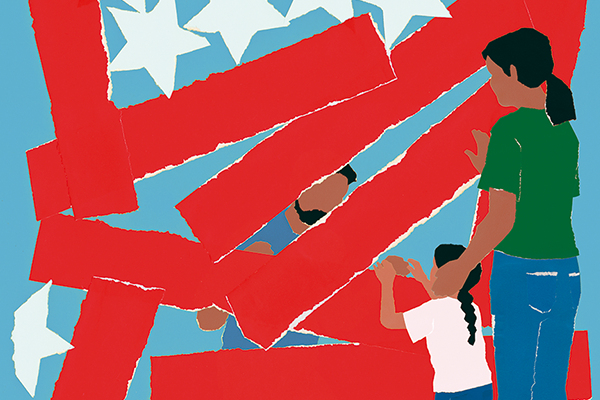
LAURA WAS AN Ecuadoran painter who sold her colorful pastoral scenes to tourists on the streets of Quito. Then the Covid-19 pandemic hit, and the tourists stopped coming. Her livelihood gone, Laura hired smugglers to help her join family in the United States. She arrived at the U.S.-Mexico border in 2021, shortly after the border wall had been raised in places from 12 to 30 feet, through the efforts of the Trump administration. The smugglers leaned a ladder against the high wall for Laura to climb. Once she reached the top, they took the ladder away. She fell into the U.S., fracturing her spine, pelvis, and both legs. She had arrived, but at terrible cost.
I wrote about Laura [a pseudonym] in Strangers in the Province of Joy, my recent book on migration across the southern border. Her story illustrates a larger point: We cannot solely enforce our way to a functioning immigration system. The $147 million price tag to raise the border wall caused a sharp increase in migrant injuries and deaths, but it did not significantly deter border crossings. And the southern border wall is just one manifestation of decades of increasingly more restrictive policies that have cost billions, killed thousands—and largely failed to curb unauthorized migration.
Read the Full Article