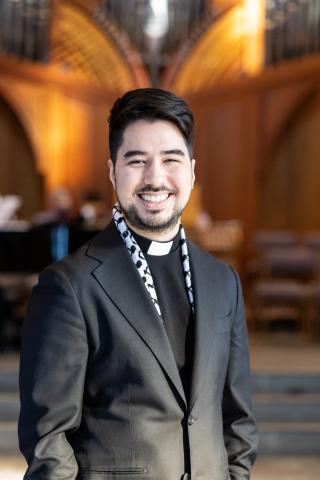
The Rev. Kenji Kuramitsu is an Episcopal priest and clinical social worker living in Chicago. Kenji is the author of A Booklet of Uncommon Prayer: Collects for the #BlackLivesMatter Movement and Beyond, and his creative writing has been nominated for a Pushcart Prize by the Asian American Writers' Workshop.
Posts By This Author
Good News for U.S. Christians: We Aren’t Special
It’s liberating to let go of hubris.

THE SOLDIER AT the National Memorial Cemetery of the Pacific in Honolulu could not have yet been in his 20s. By my estimation, none of them, standing there sweltering in the sun with their sprouting mustaches, were. Names from the Global South were stitched onto their uniforms. My grandfather joined the ancestors some years before, but this was my first time back in Hawai’i since his passing. We traced his steps backward across the Pacific to return him to my grandmother and their childhood home.
Long dormant grief flared and family members grimaced awkwardly as the ritual began. The soldiers’ cadence, turns, bugling—the ceremony of it all! Stars and stripes creased as if made of origami paper, delicate movements of the hand like a master at a tea ceremony, reminding me of long afternoons learning scouting creeds, knots, and flag-folding technique while away at camp: “On my honor, I will do my best to do my duty to God and my country ... .”
The Noose Has Tightened in Palestine
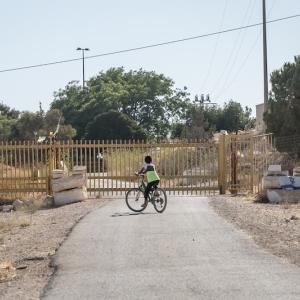
With a fragile ceasefire between Israel and Hamas in place, it is tempting for many in the West to ignore the broader issues that Palestinians still face: Namely, increased settler violence and the state of Israel annexing more Palestinian land. I went to Palestine in August, while the war that was not a war still raged, and I saw firsthand the dire reality of Palestinians in the West Bank.
'Parasite' Exposes Empty Promises of Trickle-Down Economics

Ki-woo (Choi Woo-shik) in Parasite. Credit: YouTube.
Bong-Joon-ho’s film is about what happens to those living below sea level when the rain comes.
Can a Digital Sacrament Still Impart Divine Grace?

Credit: Shutterstock
As Shamika and I called upon our own experiences in church and seminary, we became especially concerned with providing a resource for those who historically have been barred from participation at the Lord’s Table: the divorced, Christians of color, LGBTQ believers, those living far from physical community, or far from a church that is physically accessible. While we’re not trying to replace “brick and mortar” community, we believe God calls us beyond a spirit of fear in the face of innovations in technology.
4 Lenten Hashtag Curators Share Their Theologies of Resistance

Can Christians observe Lent in a way that ties social justice consciousness to spiritual Lenten practices of repentance, resistance, and solidarity? The curators of four social media campaigns — #LentenLament, #LentLite, #EmbodiedSolidarity, and #DetoxifyChristianity — are exploring what this looks like in public. “What does it mean to come together, to lock arms together, to really just stand in the gap for people?” Alicia Crosby, executive director of the Center for Inclusivity and co-curator of last year’s #EmbodiedSolidarity campaign, asked.
The Theology of Suspicion: What ‘Get Out’ Can Teach White Christians
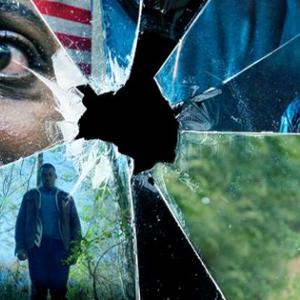
Image via "Get Out"/Facebook
We can hope, work, and pray for the day when Christians of all colors might be reconciled to one another in peace. In the meantime, Get Out reminds us that white people, especially those who claim to love us, must do better.
The Lasting Trauma of Japanese American Incarceration
75 Years After Executive Order 9066

Japanese American families form a line outside Civil Control Station located in the Japanese American Citizens League Auditorium at 2031 Bush Street in San Francisco to appear for "processing" in response to Civilian Exclusion Order Number 20 in 1942.
On Feb. 19, 1942, President Franklin D. Roosevelt empowered military commanders to execute the “forced evacuation” of anyone with Japanese ancestry from the West Coast of the United States. This order set in motion a mass incarceration that would sweep tens of thousands of people, most of them American citizens, into concentration camps throughout the country’s inland regions.