Let’s take a quick trip back to the fall of 2016. Justin Bieber, Drake, and Twenty One Pilots are topping the charts. All the cool kids are bottle-flipping. And almost every adult I know is falling in line to vote for Donald Trump. I’m from the western side of Michigan, and my home county went to Trump by almost 30 percentage points.
I was just starting to develop political opinions at that time, but it shocked me how so many people—who I knew cared deeply about their own moral lives—could countenance voting for a candidate who made a mockery of Christian values like forgiveness and marital fidelity.
Trump ran as a Republican, which allowed him to utilize the “pro-life" label despite an uneven history on the topic. That was valuable moral capital with voters like the ones I grew up around in West Michigan, who were more concerned about outward religious devotion than the rest of the state. When it came to policy, Trump wasn’t all talk: He picked Mike Pence as a running mate and released a shortlist of possible Supreme Court nominees, suggesting that those nominees overturn Roe v. Wade.
However, Donald Trump is not pro-life.
When I say that, I’m thinking along the lines of what Cardinal Joseph Bernardin calls a “consistent ethic of life” that includes but is not limited to careful moral consideration of the rights of the unborn. In a 1983 lecture at Fordham University, he argued that Christians should be equally principled in protecting life from the threat of nuclear weapons or the death penalty alongside the traditional abortion-forward understanding of the “pro-life” idea. Recently, Pope Leo applied similar thinking regarding the treatment of immigrants in the U.S., saying, “Someone who says ‘I am against abortion, but I am in agreement with the inhuman treatment of immigrants in the United States,’ I don’t know if that’s pro-life.”
READ MORE: Keeping the “Consistent” in “Consistent Life Ethic”
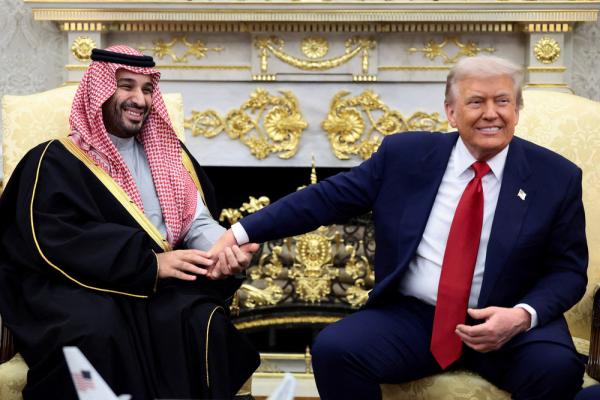
There are too many examples of Trump rejecting this fuller conception of being “pro-life” than I can unpack here. Still, a particularly jarring moment can cut through the noise, like it did earlier this week when I checked the news to see smiling photos of Trump standing with Saudi Arabian Crown Prince Mohammed bin Salman. It marked bin Salman’s first visit to the U.S. since the 2018 murder of Jamal Khashoggi.
Khashoggi, a columnist for The Washington Post, was killed and dismembered inside the Saudi Arabian consulate in Istanbul in 2018. The office of the director of national intelligence, in a 2021 report, concluded that “Crown Prince Muhammad bin Salman approved an operation in Istanbul, Turkey to capture or kill Saudi journalist Jamal Khashoggi.” To put it simply, U.S. intelligence believes bin Salman had Khashoggi murdered.
And yet on Tuesday, Trump claimed the exact opposite, saying in response to a question about Khashoggi's killing: “A lot of people didn’t like that gentleman that you’re talking about. Whether you like him or didn’t like him, things happen, but [Mohammed] knew nothing about it.”
Brushing off a brutal murder and exonerating the man who ordered it is an example of Trump’s profound callousness about the value of life. It’s not a new stance, and not even uniquely brazen. Like so much of the evil in the world, Trump’s welcome of bin Salman and dismissal of his role in Khashoggi’s murder feels like business as usual. And in some ways, it is. In September, Trump hosted Israeli Prime Minister Benjamin Netanyahu, who has a warrant out for his arrest on war crimes charges from the International Criminal Court, for lunch at the White House. One of the particular horrors of the Gaza war are the hundreds of Palestinian journalists killed, often deliberately.
While the White House may use policies meant to restrict abortion as a chance to tout Trump’s “life-affirming” credentials, his actions complicate the narrative. The administration's actions suggest that whatever protections it may provide for the unborn, those commitments don’t extend to born children and their parents—especially if they’re not legal, natural-born U.S. citizens. Beyond those concerns, Trump’s contempt for journalists and hatred of those he considers enemies is well-documented.
This week’s meeting at the White House is likely the result of cold strategic calculus about the value of human life. Voices in the White House want Saudi Arabia as an ally in the Middle East for their oil resources and military power. In the face of those concerns, it can be tempting for those in power to ignore the death of one person, no matter how cruel. This cynicism lets those responsible rebuild their image. And images—like the ones of Trump and bin Salman smiling together in front of the White House—matter.
Jamal Khashoggi wrote columns speaking out against the abuses of the Saudi government. He was deliberately silenced for his choice to stand up for the weak and against the powerful. The writer of Proverbs asks us to “Speak up for those who cannot speak for themselves, for the rights of all who are destitute. Speak up and judge fairly; defend the rights of the poor and needy” (31:89). Khashoggi’s reporting aligned with this biblical command, and Trump’s excuses for bin Salman do not. Christians should never ignore the moral weight of moments like Tuesday’s White House visit, no matter how commonplace they become.
Refusing to legitimize bin Salman would have been a small but substantive step in championing the sanctity of human life. While Trump continues to pay ever-flimsier lip service to a narrow vision of what it means to be pro-life, I’m not surprised to see his actions consistently show the opposite.
Donald Trump is not pro-life.

Got something to say about what you're reading? We value your feedback!