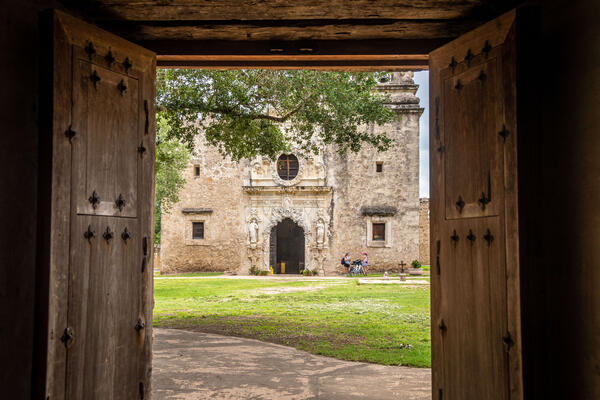
For many of us who were raised Christian, our earliest memories of Christmas may have featured the town of Bethlehem. Whether through songs or the stories in scripture, this quaint town that welcomed the Christ child took on a central role in our faith. In the 2000 years since Christ’s birth, the city of Bethlehem, located in the Israeli-occupied West Bank, has traditionally celebrated the Christmas season in grand style.
But for two years, this Palestinian city canceled its Christmas celebrations due to the genocide in Gaza. However, this year, the lights returned to Bethlehem’s Manger Square, as the historic Christmas tree was lit and the festivities resumed. With a fragile ceasefire in place, Bethlehem’s mayor, Maher Canawati, spoke to the crowd gathered in the square: “Despite years of pandemic, war and hardship, we light this tree to declare that light is stronger than darkness. Bethlehem remains open.”
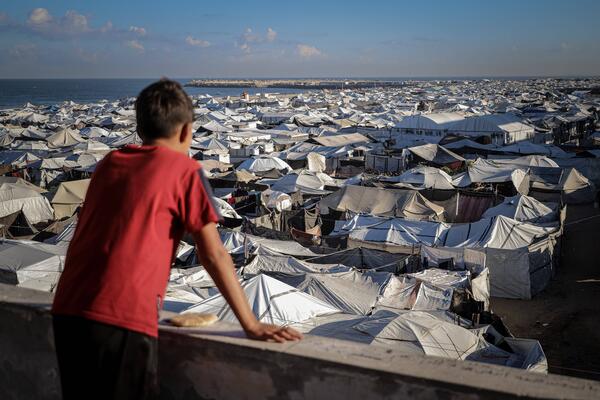
While the recommencement of this tradition might suggest a state of normalcy, just 45 miles away from Bethlehem, the genocide of Palestinians in Gaza has not ended; it has only evolved into a slower, more calculated erasure. Canawati acknowledged in an interview with the BBC that the decision to resume Christmas festivities was not without controversy, as many Bethlehemites have family in Gaza. But from Canawati’s perspective, “Christmas should never be stopped or cancelled. This is the light of hope for us.”
Canawati’s words underscore a tension we all experience at various points in our lives: How do we hold grief and joy simultaneously?
Having lived and worked in challenging parts of Ghana, Jordan, the West Bank, and Philadelphia—where injustice seems acute, and joy feels particularly difficult to come by—this has become a perennial question for me. The ubiquity of sorrows, locally and globally, demands our attention, and yet joy cannot be an afterthought. The activist and author adrienne maree brown sees joy and pleasure as critical to liberation. In her book, Pleasure Activism: The Politics of Feeling Good, brown argues that “Pleasure is not one of the spoils of capitalism. It is what our bodies, our human systems, are structured for; it is the aliveness and awakening, the gratitude and humility, the joy and celebration of being miraculous.” In other words, pleasure and its derivatives are non-negotiables in our quest for liberation.
Although I knew this, I could never shake my guilty feeling when experiencing moments of joy while the causes and communities I cared about struggled.
Jack Gilbert’s poem, “A Brief for the Defense,” helped me wrestle through this conundrum. Gilbert matter-of-factly begins with, “Sorrow everywhere. Slaughter everywhere. If babies are not starving someplace, they are starving somewhere else.” He further describes a myriad of sorrows—somebody sick in the village, the “terrible streets of Calcutta,” and women trapped in the cages of Bombay. Yet, despite this bleak reality, Gilbert insists, somewhat paradoxically, that “we must risk delight … we must have the stubbornness to accept our gladness in the ruthless furnace of this world.” Delight is not optional because in forfeiting it “we lessen the importance of their deprivation.” While it is an understandable temptation to solely focus on the grave injustices of this world, Gilbert asserts that to do so would be to “praise the devil.”
READ MORE: Mary Casts Down Pete Hegseth’s False God
Reading Gilbert’s argument for radical joy in the midst of all-consuming and ubiquitous injustice could be interpreted as scandalous or tone-deaf. But like our Palestinian siblings’ insistence on celebrating Christmas even in the midst of genocide, I believe there is some ancient wisdom to be gleaned from Gilbert’s poem and the witness of Palestinians. Stubborn insistence on delight in the face of the “ruthless furnace of this world” is not just a convenient escape or temporary salve but rather an ontological challenge to the darkness, grief, and sorrow of our world.
Stubborn insistence on delight in the face of the “ruthless furnace of this world” is not just a convenient escape or temporary salve but rather an ontological challenge to the darkness, grief, and sorrow of our world.
This insistence on stubborn joy feels especially urgent this Advent season, when the darkness of our social and political realities mirrors the ancient longing for light. First-century Jews suffering under Roman occupation and state violence eagerly awaited the arrival of the messiah who would bring a total military defeat of Rome. However, the kingdom that was inaugurated by the birth of Christ is not one of military might, but rather one that acts as a great light to the world, pointing it toward moments of joy and hope even in the midst of deep darkness.
Advent’s promise of joy is not escapism but rather defiance. It does not suggest we deny the violence of the world, the disappointments in our hearts, or even the exhaustion in our bodies. Rather, Advent grounds us in a hope that violence and fear will not have the last word. Importantly, this joy is not a passive substitute for meaningful action. Joy, like other acts of resistance, is the action that allows us to be steadfast in the dark. Therefore, we must—contra conventional wisdom—give in to delight, no matter how tender, fleeting, or even ordinary.
So, when Canawati, despite the very real sorrow that remains among Palestinians, insists that Christmas ought to be celebrated in Bethlehem, he echoes the ancient wisdom of insisting on joy as a sacred element of resistance during periods of darkness. The Christian population of Bethlehem exemplifies a joy that is neither ignorant nor insensitive to the material realities of genocide and occupation. Instead, they remind us that the only way to defeat injustice is to embrace stubborn joy.

Elom Tettey-Tamaklo is an opinion writer for the 2025 Sojourners Journalism Cohort.
Did this article have an impact on you? Tell us how! Whether you’re moved to take action, have a question, or want to share a comment (good or bad), we value your feedback!