The church has a funny sense of time. When everyone else is looking at Spotify Wrapped and other year-in-reviews, the Christian liturgical calendar has already turned the page, insisting a new year is already here. You’d be forgiven for thinking of Advent as an end-of-year marker, but as any theology nerd will remind you, Advent is the first season in the church’s annual cycle, not the last. Which is to say: The church starts the new year not with champagne or fireworks, but with a season of waiting.
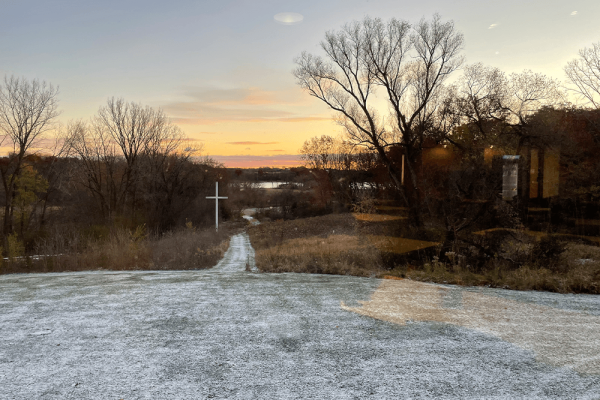
In the Northern Hemisphere, this year-end/year-beginning coincides with colder days, longer nights, and bare trees. And it’s in this moment—when it’s gray and freezing and most things look dead—that Christians make a daring claim: This bleakness all around us is not the end, but a beginning. The new life God promises begins in the dark.
You’ve felt some bleakness this year, I suspect: So many of the stories Sojourners published were stories of loss—cut funding, detained students, slashed budgets, deported neighbors, occupied cities, bombed boats, unjust peace. And those were just the losses that made headlines; many of us suffered quieter losses too—of jobs, good health, a sense of safety, people we loved, or dreams we had for the future. We grieve.
And amid all this, Advent has the nerve to whisper: God is at work. In our grief over all that’s ended, we’re invited to keep watch and stay alert, attentive to signs of the light that is both coming and already here.
At this flipping of the calendar, we’ve rounded up some of our favorite stories that gave us hope in 2025—stories of creative defiance, courageous solidarity, and radical testimony to a way of living that transcends this ol’ mess. We offer them as contemporary echoes of John the Baptist: slightly odd, often-countercultural proclamations from the wilderness of the past year declaring, despite it all, light shines in the darkness. It may feel like the end. But Advent tells us it’s the beginning.
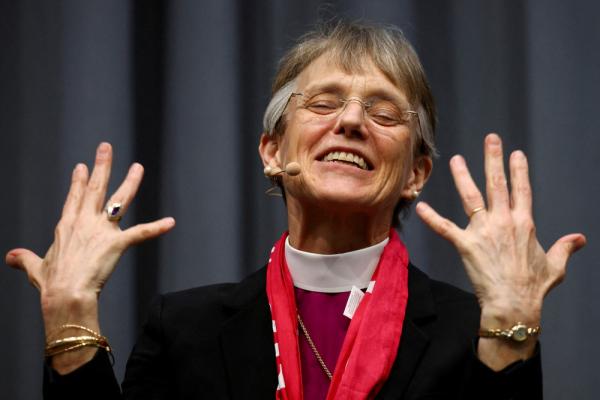
The bishop whose sermon went viral
The day after Donald Trump’s second presidential inauguration, Bishop Mariann Budde said what many of us were thinking when she directly addressed Trump in her sermon, asking him to have mercy on LGBTQ+ folks, migrants, and refugees. “I wanted to impress upon everyone, not just the president, that when we are in a position to be merciful, it’s biblical and it’s our obligation,” Bishop Budde told our senior associate news editor Mitchell Atencio later in an interview with Sojourners. “It’s part of what it means to be a humane and moral society.”
These creative acts of faith in the first 100 days of Trump’s second term
In the first 100 days of Trump’s second term, there were myriad ways the policies of a new administration wreaked harm on international aid, federal workers, migrants, and so many others. But as our president Adam Russell Taylor outlines in this op-ed, there were also countless ways people of faith joined in the work of those who were directly harmed, from leading vigils and filing lawsuits, to dialing down polarization and stitching quilts.
The migrant communities who faced the threat of immigration raids with courage…
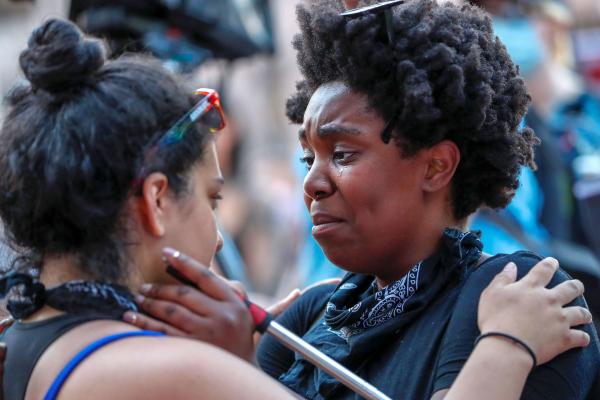
“We are full of fear, but we are not helpless,” Giselle, a 40-year-old living in a mixed-status immigrant family in Chicago told Sojourners in reporting by Ken Chitwood. “We have the power of God, the power of the church, and the power of the Holy Spirit on our side.”
…and the allies who have found creative ways to keep their migrant neighbors safe
Advocates and organizers have Congregations across the country have made plans for what they’d do if ICE came to their church. Community members in Montana have worked to secure the release of those wrongfully detained. Churches have partnered with other groups to offer rapid response networks, offering impacted migrant communities everything from boots to groceries.
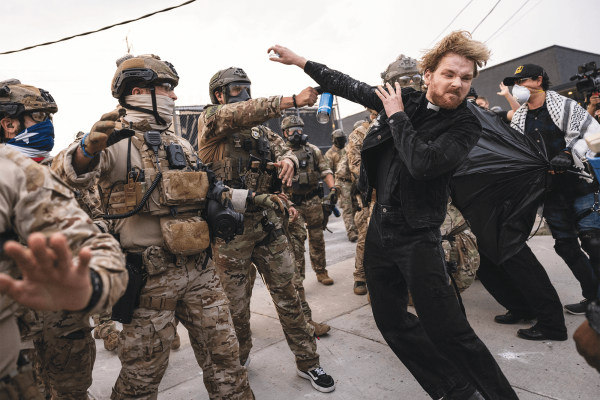
Plus the pastors who’ve put their bodies on the line to protest ICE’s treatment of those in detention centers
“During a lull in the action, I was slammed to the ground and zip-tied. Later, I was charged with three misdemeanors,” wrote Rev. Michael Woolf, recounting his arrest outside an ICE detention center. “If they are doing this to pastors who are praying […] then it makes me shudder to imagine what they might be doing to our neighbors behind closed doors,” Rev. David Black told our associate editor Josina Guess in an interview.
This broad coalition of evangelicals who came together in solidarity with Palestinian Christians
In September, a group of evangelicals, including those like Preston Sprinkle who identify as “a Bible-believing, non-liberal, card-carrying evangelical Christian,” gathered in a Chicago suburb to listen to Palestinian Christians. Though theologically diverse, these evangelicals and other U.S. Christians grieved the uncritical support many U.S. Christians have given Israel as its retaliatory attacks on Gaza have left tens of thousands of civilians dead, hungry, or homeless. “Collective liberation—for Palestinians and everyone else—will only be possible through forming broad coalitions of people with diverging beliefs and opinions,” wrote our senior associate opinion editor Josiah R. Daniels in his essay about the gathering.
A volunteer choir that helps keep protests safe and participatory
“I had never run a choir or even done much song leading outside of being a camp counselor until I decided this needed to be done,” Peter Burkholder, co-founder of the Rapid Response Choir, told Sojourners in an interview. “It makes me feel so much comfort and joy to wake up and say, “Well, the news is awful, but at least we’re here, trying to do something about it.”
These people who gave away their inherited wealth
There was no shortage of stories about billionaires behaving badly this year. But two articles we published—including this story about 100 acres of inherited farmland and this interview with former 1-percenter Chuck Collins—featured people of faith who were moved to give away their wealth and testify to a more just economy.
It may feel like the end. But Advent tells us it’s the beginning.

Got something to say about what you're reading? We value your feedback!